Neighbor's Tree Fell on My Texas House, Who Pays?
 By
By
Houston Home Insurance
A Neighbor's Tree Fell on Your House in Texas, Who Pays?
The answer surprises most people, and knowing it saves both money and a friendship.
By Charles McDade, LUTCF, founder of McDade Insurance Brokerage Group
When a neighbor's tree crashes onto your roof, the first instinct is that they should pay for it. In Texas, usually they do not, and understanding why saves a lot of frustration and a strained friendship. This is the other half of what I call the Tree Test, whose tree it was and whether it was provably dead, one of the five frameworks on our guide to what carriers are quietly changing.
Most people do not want a fight with the neighbor. They want the roof fixed, the water stopped, and the family safe. That is why this article starts with the insurance rule before anyone starts blaming the wrong person.
I have walked many Houston families through this exact situation, so let me give you the rule, the one big exception, and the steps that protect you either way.
If my neighbor's tree falls on my house in Texas, who pays?
In most cases your own homeowners policy pays, even though it was your neighbor's tree. When a healthy tree falls in a storm, Texas treats it as an act of nature, so each owner files with their own insurer, and filing on your own policy is usually the fastest way to get repaired.
The exception is negligence, a provably dead or dangerous tree your neighbor was warned about and ignored, which can shift liability to their policy. That is the heart of the Tree Test, whose tree it was and whether it was provably dead.
The rule that surprises everyone
Under Texas law, a healthy tree that falls in a storm is treated as an act of nature, and damage from an act of God is not charged to anyone unless negligence is involved. That means when your neighbor's healthy tree comes down in high winds and hits your home, you file with your own insurer, and your neighbor files with theirs for any damage on their side. Your policy covers the damage to your home, subject to your deductible and limits.
Removal usually follows the same logic. The owner of the property where the tree lands is generally responsible for clearing it, which often means you, even though it started in your neighbor's yard. The removal is frequently part of your claim, so keep that in mind when you call it in.
The one big exception, a provably dead tree
The picture changes when the tree was not healthy. If a tree was clearly dead, diseased, or dangerous, and your neighbor knew or should have known and failed to act, their insurance may be the one responsible. The strongest version is when you raised the concern, ideally in writing, and they did nothing before it fell. That is the difference between an act of nature and negligence.
Here is how it usually plays out in practice. You still file on your own policy to get repaired quickly, and if your carrier agrees your neighbor was negligent, it can pursue the neighbor's insurer through a process called subrogation, which can win back your deductible. The same rule runs in reverse, so a dead tree on your own property that you ignore can become your liability.
What to do, step by step
Make sure everyone is safe first, and stop further damage only if you can do it safely, for instance by covering an opening once it is clear. Then document everything with photos, including the condition of the tree, because that is what answers the provably dead question later. File with your own insurer promptly, keep your receipts, and mention any prior concerns you raised with your neighbor.
We are insurance brokers and not attorneys, so for a true liability fight, a contested denial, or a large uninsured loss, we will point you to a good Texas attorney. For the insurance side, and for the other half of the Tree Test, how carriers read your trees from above, see our guide on what aerial photos see at renewal. Because we shop the 50+ top Texas carriers we know well, we can make sure your liability and your limits are right before a tree ever falls, and about 40 percent of the time we tell a family their coverage is already solid and to leave it alone. The full set of frameworks is on our contract guide.
A neighbor's fallen tree, common questions
If my neighbor's tree falls on my house in Texas, whose insurance pays?
In most cases, your own homeowners policy pays for the damage to your home, even though it was your neighbor's tree. When a healthy tree falls in a storm, Texas treats it as an act of nature, so each owner files with their own insurer. It feels backward, but it is usually the fastest way to get your home repaired.
When is my neighbor liable for their tree falling on my property?
When negligence is involved. If the tree was clearly dead, diseased, or dangerous, and your neighbor knew or should have known and did nothing, their insurance may be responsible. The strongest cases are ones where you warned them, ideally in writing, and they ignored it. A healthy tree felled by wind is not negligence.
Who pays to remove the fallen tree?
Generally the owner of the property where the tree lands, which usually means you, even if it was your neighbor's tree. Removal is often part of your claim, subject to your deductible and limits. If negligence shifted liability to your neighbor, their insurer may cover removal instead.
Can I get my deductible back if my neighbor was negligent?
Possibly. If you file on your own policy and your carrier believes your neighbor was negligent, it can pursue the neighbor's insurer through a process called subrogation. If that succeeds, you may be reimbursed for your deductible. This is one reason to document the tree's condition and tell your carrier what you knew.
What should I do right after a tree hits my house?
First make sure everyone is safe and stop further damage if you can do so safely, then photograph everything, including the tree and its condition. File with your own insurer promptly, keep your repair receipts, and mention any prior concerns you raised with your neighbor. Quick documentation protects both your claim and any later negligence question.
Should I hire a lawyer if my neighbor's tree damaged my home?
It depends on the situation, and we can help you understand the insurance side first. We are insurance brokers and not attorneys, so for a true liability dispute, a contested denial, or a large uninsured loss, a Texas attorney is the right call. For most fallen tree claims, though, filing on your own policy and documenting the tree is the practical path.
Keep going
The pillar this guide belongs to, with all five frameworks for reading your policy.
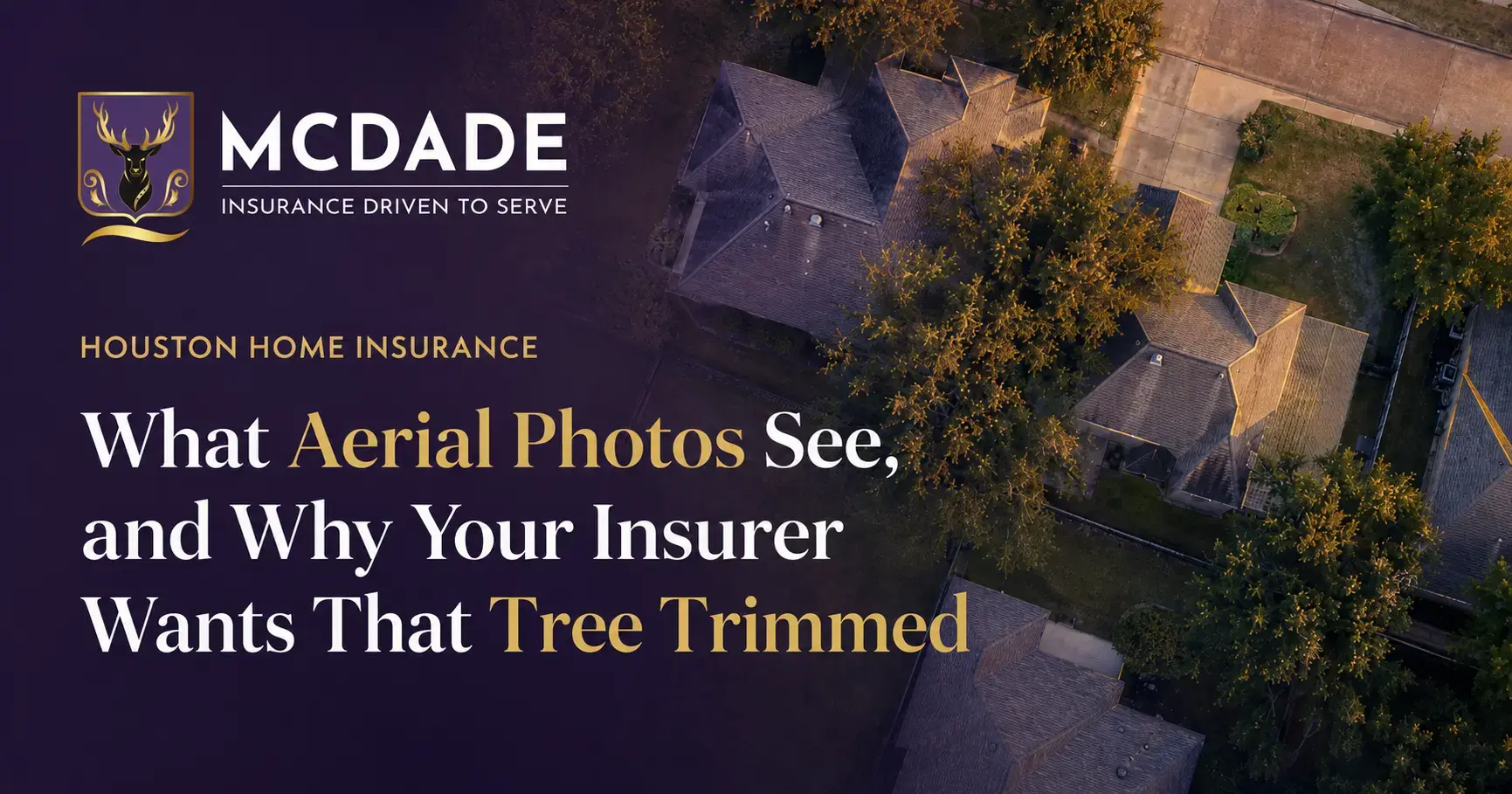
The other half of the Tree Test, how carriers read your trees from above.
Extra liability protection, which matters when a tree of yours causes damage.
How Texas home coverage works, and how we match your home to the right carrier.
About the author
Charles McDade, LUTCF, is the founder of McDade Insurance Brokerage Group and a board member of the Independent Insurance Agents of Houston. He started his insurance career at Liberty Mutual, where over six years he became a top personal lines producer, selling auto, home, and life across the Houston area, before opening his own independent agency in 2020. Because he reads these contracts and shops the market for so many Houston families, he knows how carriers are inspecting homes today and how to keep yours covered. McDade Insurance was recognized as a Travelers S.T.A.R Agency for 2026.
Want to be sure your limits are right before a tree falls?
Send us your renewal and we will check your liability, your deductible, and your limits, and make sure your home is covered the way you expect for storms and fallen trees. If your coverage is already solid, we will say so.
No broker fees for personal lines. Local broker. National bench.