 By
When a Gulf storm or a hard freeze takes the power, here is what a Texas home policy can pay for, what it can't, and how to keep your food, your generator, and your people safe until the lights come back.
The short answer
Your home policy can pay for some outage losses, and the cause decides which. Food spoilage coverage varies by policy, and the Texas Department of Insurance ties it to a covered cause. Insurance is for the sudden, the accidental, and the catastrophic, so call your agent before you file a small claim. Surge damage turns on its cause and your form. A hotel stay for an outage alone isn't covered. Keep food cold the USDA way, and run a generator at least 20 feet from doors, windows, and vents.
What Beryl taught me about an outage
Hurricane Beryl knocked out power to 2.26 million CenterPoint customers in July 2024, many of them for days. Freezers thawed and the food spoiled. Then the calls and posts started. File a claim for your food. Get your money.
My family's home in Humble was less than 10 years old, and the power stayed out for well over a week, with trees down through the neighborhood. I had just installed a generator, and I learned fast that owning one and running one through a long outage are two different jobs. You manage the hours, the oil, the heat, and the people depending on it.
My grandmother in Clear Lake stayed with my family for about a week until her power came back. The Whataburger app told me more about restored power than the outage map did. At the office, my team fielded hundreds of claim questions, and every time more than two people asked the same thing, I posted the answer.
My fence, by the numbers
I sent clients photos of my own back fence. My deductible was 2 percent, and the new fence came in only about 1,000 dollars over it. For a claim that small, filing made no sense for my family while neighbors and clients had bigger losses and real claims to make.
My family was blessed. A lot of good families spent that week on claim questions nobody had answered before the storm. So let me answer them plainly, the way I would for my own neighbor.
Beryl reminded me that prepared does not mean finished.
When the outage comes with a freeze
Summer outages bring heat. Winter outages bring cold rooms and frozen pipes, and they call for a different plan. February 2021 showed how hard that can get. Winter Storm Uri left close to 4.5 million Texas homes and businesses without power at its peak, and a University of Houston survey measured how long families went without.
- 4.5 millionTexas homes and businesses without power at the storm's peak, or close to it
- 42 hourswithout power, on average, for the Texans who lost it
- Over 2 dayswithout running water, on average, for the Texans who lost it
Five winters later, the forecast was serious again. In January 2026, ice and a hard freeze closed Houston's schools and government offices, as ABC13 reported. The time to plan for an outage is before the lights go out.
If the power goes out in a hard freeze and the house starts to cool, the pipes are the first worry. After the 2021 storm, the Texas Department of Insurance, or TDI, explained that a home policy may cover a freezing loss if the policyholder took reasonable care to keep the heat on, or to shut off the water and drain the pipes. When the heat is gone, the second half is the one you can still do. Our freeze checklist walks through it. Our post on whether home insurance covers frozen pipes explains what TDI told insurers about outages.
The food question, answered two ways
Start with the clock. USDA says a closed refrigerator keeps food cold for about 4 hours, and a full freezer holds its temperature for about 48 hours, or 24 if it's half full. Keep the doors shut as much as you can.
About how long food stays cold with the doors closed
After the 2021 freeze, families asked our desk whether spoiled food was covered, and with the whole city below freezing, the cold was part of the answer. USDA's way is to fill clean jugs, buckets, or cartons with water, set them outside to freeze, and use that ice in the fridge, the freezer, or a cooler. Keep the food itself inside, since USDA says not to put frozen food out in the snow.
TDI's winter storm tips say that if food spoils because of a power failure caused by something your policy covers, your policy should pay up to 500 dollars to replace it, and often there's no deductible. Policies differ. Some carry food spoilage coverage and some don't. Either way, take pictures and keep a list of what you throw out.
Your utility won't fill the gap. CenterPoint's claims page says its tariff leaves it unable to reimburse customers for food or other losses from power outages.
Before you file for food
Insurance is for the sudden, the accidental, and the catastrophic. A storm outage and a grid outage may not be handled the same way, and a claim with no deductible still goes on your claim history. If 500 dollars would make a real difference for your family, call your agent and the claims department first, ask how the claim would be handled, and don't open one until you're sure.
Food handled? The rest of the answer is in your policy. Send us your declarations page, and we'll show you what an outage would cost you, in dollars.
See What an Outage Costs MeRun the generator by the manual
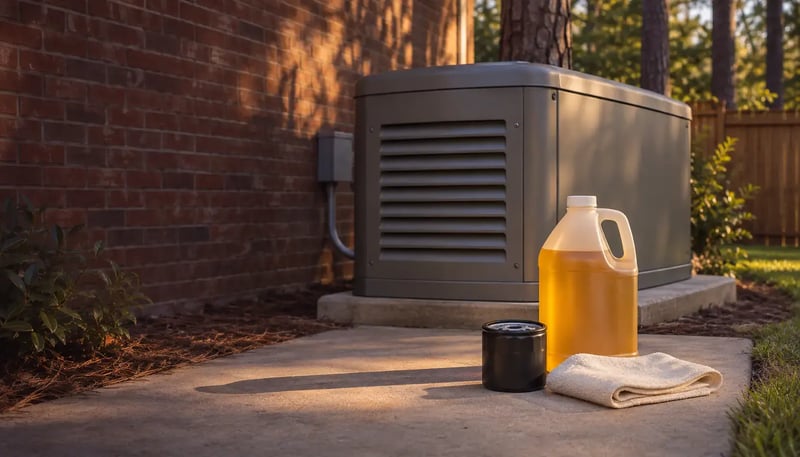
Beryl taught me more about my generator than installation day did. Mine is a Generac home standby unit, and a long outage brings three jobs. Rest, oil, and heat.
Generac's guidance for its home standby generators is specific. After 24 hours of continuous running, shut it down for at least 30 minutes, so it can rest, the oil level can be checked, and you can look it over.
The weather counts too. When it's below 40 degrees or above 85, Generac calls for an oil and filter change after every 100 hours of run time. Four days of a Houston summer outage is about 100 hours.
So I keep spare oil and a spare oil filter on hand, and Generac's own list adds an air filter. It also says to check the generator every 24 hours, when the weather lets you reach it safely. Your model's service intervals are in your owner's manual, so read yours before the next storm.
Keep the kids and the pets away from it. A running generator is hot and loud, and it puts out carbon monoxide. Kids playing near a machine like that is a bad idea, so keep the family clear.
Keep the exhaust away from your people
Carbon monoxide rides along with every generator, grill, and heater in an outage. TDI notes that it's sometimes called the invisible killer, because you can't see or smell it.
The 2021 count
Carbon monoxide caused 19 of the 246 deaths the state tied to the February 2021 storm. The sources included portable generators, grills, space heaters, vehicles run in closed spaces, and ice blocking the vents of gas heaters.
Texas Department of State Health Services, final report on storm deaths, December 31, 2021.
A University of Houston survey after that storm found that among Texans who stayed home without power, 26 percent used a gas oven or cooktop for heat, and 8 percent used a grill or smoker indoors. These rules keep the exhaust where it belongs.
Do
- Run a portable generator outside only, in a well-ventilated spot at least 20 feet from doors, windows, and vents.
- Plug appliances into the generator directly, or use a heavy-duty, outdoor-rated extension cord.
- Turn it off and let it cool before you add fuel.
- Put carbon monoxide alarms on every level and outside sleeping areas, and test them monthly.
- Have a qualified electrician connect any generator to the house wiring, with a properly rated switch that meets the National Electrical Code.
Never
- Run a generator in the garage, even with the door open.
- Connect a portable generator to your home wiring or breaker panel yourself.
- Leave a car running in the garage.
- Bring a grill or an outdoor heater inside.
Sources, TDI's generator tips, updated September 26, 2025, CenterPoint's portable generator tips, and the CPSC on carbon monoxide alarms.
TDI adds that wind can blow carbon monoxide inside, so watch where the breeze carries the exhaust. CenterPoint asks customers not to connect a portable generator to their home wiring or straight to the breaker panel, and to call the maker or a licensed electrician for help.
When the power comes back
Electrical trouble can damage electronics, appliances, and the control board in an air conditioner. In 2025, KPRC reported on Pearland homeowners who blamed power surges for thousands of dollars in appliance damage, and CenterPoint pointed them to its tariff, which limits what the utility pays.
That puts the question on your own policy. Whether it pays comes down to what caused the damage and how your form words electrical damage, and forms differ, so this one takes a read of the policy itself. While the power is out, unplug electronics and switch off major appliances, then bring them back one at a time.
The add-on built for this is equipment breakdown coverage, an endorsement that pays for damage to home mechanical and electrical systems from internal breakdown, such as the air conditioner, the water heater, the pool pump, the electrical panel, and appliances. If you carry it, it's listed as an endorsement on your declarations page.
Two questions about your generator
Is it covered as part of the home, or as your personal property? And does the policy cover its own breakdown, or only damage from a covered event? Both answers are in your form, and we read that line with clients.
The line from the food question holds here too. Insurance is for the sudden, the accidental, and the catastrophic. An air conditioner that wears out with age is a maintenance matter, and a home policy isn't a maintenance plan.
A hotel while the power is out
After the 2021 freeze, a lot of families called our desk to ask whether loss of use would pay for a hotel while the power was out. TDI's answer is plain. If you left your house because of a power outage, your policy won't cover additional living expenses.
| What happened | What the policy does |
|---|---|
| The power is out, and the house isn't damaged | No additional living expenses for leaving |
| A covered event damages the house, and you can't stay in it | The reasonable extra cost of living elsewhere, up to your limit, usually for up to 12 months |
| Your limit | On your declarations page. TDI says most policies pay 10 to 20 percent of what the house is insured for |
A burst pipe in a freeze can make a house unlivable, and when that claim is covered, loss of use applies. Keep every receipt, as TDI advises. Our post on whether insurance pays for a hotel in a winter storm walks through loss of use in full.
Before you file, two numbers and one call
After an outage, the instinct is to file for everything. Two numbers and one call come first.
-
The deductible, in dollars
Your deductibles are on your declarations page, and the one that applies depends on what caused the loss. When a loss comes in under its deductible, the claim pays nothing.
-
The claim record
A claim can show on your CLUE report, the claim history carriers read, even when it pays nothing. TDI lists three or more nonweather claims in three years among the reasons a company might not renew a home policy, and it counts broken pipes among nonweather events.
-
The call, before the claim
Call your agent, then the claims department. Ask how the claim would be handled, whether it would count as weather or nonweather, and what it would pay after the deductible. Say you're asking first, and don't open a claim until you're sure. If you do file, CenterPoint's claims page explains how to get a letter on how long your outage lasted.
Real claims deserve real support, and a covered loss filed well is exactly what the policy is for. Our post on whether to raise your home insurance deductible walks through the math.
Questions readers ask next
Does homeowners insurance cover food that spoils during a power outage?
Some policies do, and some don't. TDI says that if food spoils because of a power failure caused by something your policy covers, the policy should pay up to 500 dollars to replace it. A paid claim still goes on your claim history, and nonweather claims can count against you at renewal. If 500 dollars would make a real difference, call your agent and the claims department first, ask how the claim would be handled, and don't open one until you're sure.
Can I keep food outside in the cold when the power is out?
Keep the food inside. USDA says not to put frozen food outside in the snow. To use the cold, fill clean jugs, buckets, or cartons with water, set them outside to freeze, and put that ice in the fridge, the freezer, or a cooler. With the doors closed, a refrigerator keeps food cold for about 4 hours, and a full freezer holds its temperature for about 48.
How far from the house should I run a generator?
At least 20 feet from doors, windows, and vents. TDI says to pick a well-ventilated spot outside, because wind can blow carbon monoxide inside, and never to run one in the garage, even with the door open. Plug appliances into it directly or use a heavy-duty, outdoor-rated extension cord, and have a qualified electrician make any connection to the house wiring.
How long can a home standby generator run without a break?
Generac says to rest its home standby generators every 24 hours. After 24 hours of continuous running, it calls for a shutdown of at least 30 minutes, so the engine can rest, the oil can be checked, and the unit can be looked over. Generac also says to take the load off and run it without load for at least 5 minutes, then let it cool 5 more, since an immediate shutdown under load can damage the engine. Other makers set their own intervals in the owner's manual.
Does home insurance cover power surge damage to electronics and appliances?
It depends on what caused the damage and on your form. A loss from a covered event can be paid up to your limits, minus the deductible that applies, and forms word electrical damage differently. Wear and gradual breakdown aren't covered, because a home policy is for the sudden and the accidental. Equipment breakdown coverage, an add-on endorsement, pays for internal breakdown of systems like the air conditioner and appliances.
Will my insurance pay if my air conditioner fails after a power outage?
It may, if a covered event damaged it. Then your policy would pay to repair it, up to your limits and minus your deductible. If it fails from age or wear, that's a maintenance matter, and a home policy doesn't pay for it. Equipment breakdown coverage is the add-on that pays when the unit breaks down from the inside. Your declarations page shows whether you carry it.
Sources worth opening
- The Texas Department of Insurance, its winter storm tips (updated April 29, 2025) for the food line and the pipes, and its Bulletin B-0010-21 (March 9, 2021) for reasonable care after a freeze
- TDI on additional living expenses (updated April 10, 2025) for the outage rule, the limit, the 12 months, and the receipts
- TDI's generator tips (updated September 26, 2025) for the distance, the garage, the electrician and the switch, the cords, and refueling, and its page on home insurance canceled or not renewed (updated January 15, 2026) for nonweather claims
- USDA's food safety guidance for winter storms, opened November 9, 2026, for the fridge, the freezer, refreezing, and ice made outside
- Generac, Running your generator for extended periods during a major outage (August 27, 2026) and Continuous use maintenance for home standby generators (July 30, 2026), for the rest, the oil, and the spare supplies
- CenterPoint Energy, its portable generator tips and its claims page written after Beryl, for the tariff and the outage letter
- ABC13, January 27, 2026, for the January 2026 closings, and T&D World, July 11, 2024, for CenterPoint's Beryl count of 2.26 million customers
- The University of Houston Hobby School of Public Affairs, its report on Winter Storm Uri, March 29, 2021, for the homes and businesses without power, the hours without power and water, and the heating figures
- The Texas Department of State Health Services' final report on February 2021 storm deaths, December 31, 2021, and the CPSC on carbon monoxide alarms
- KPRC, July 17, 2025, for the Pearland surge claims and CenterPoint's tariff
The purpose is to help the reader ask better questions before claim time.
General insurance education. For electrical, generator, or medical questions, ask a licensed professional, and follow your utility and local officials. Carrier rules, eligibility, underwriting, policy language, and the final contract control. Figures carry the dates shown.
Know your policy before the next outage
Your food and your generator have a plan. Give your policy the same minute.
- Send your declarations page. Use the button below, or email it to contact@mcdadeins.com.
- We read it with you. A licensed Texas agent reads your deductibles in dollars, any food or equipment breakdown coverage and its limit, and loss of use.
- You get a straight answer. Stay, adjust, or switch, with the reason in writing.
About 40 percent of the time we tell homeowners to stay with their current carrier, and sometimes even with their current agent, because that is the right answer for the family.
We work with 50+ top Texas carriers we know well. Local broker. National infrastructure. Carrier availability and underwriting vary by risk and location. Prefer to talk it through? Talk to a Broker, or call 281.378.5002. We translate the insurance contract before claim time.
The review is free. The decision is yours. No broker fees for personal lines clients.
Already a client with an outage question? Schedule a Service Meeting.